
Blog
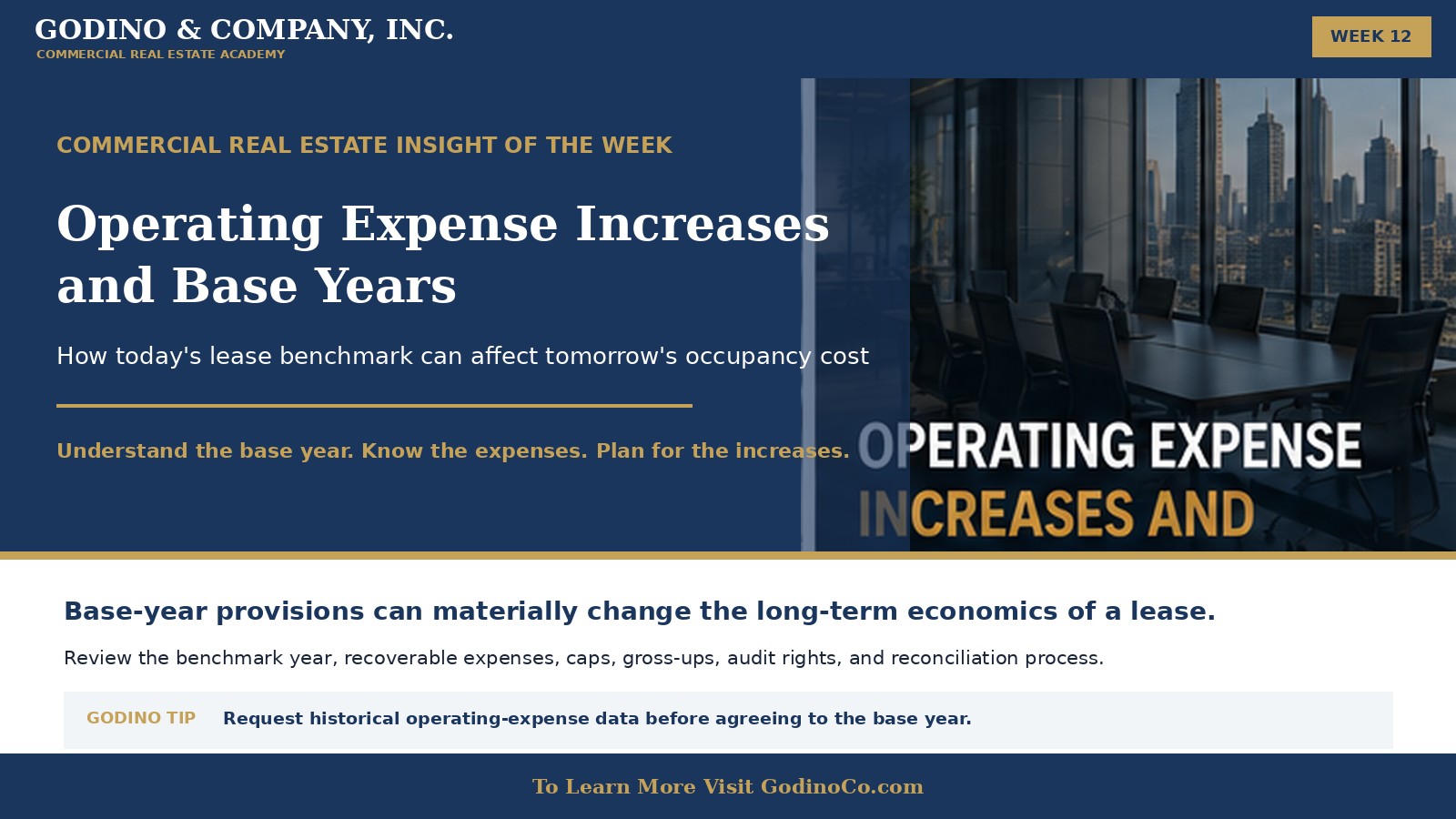
Understanding Operating Expense Increases and Base Years in Commercial Leases
Understanding the base year in a commercial lease is essential when evaluating the true cost of occupancy. Although operating expenses may be included in the initial rent, tenants often pay their proportionate share of future increases in expenses such as real estate taxes, insurance, utilities, maintenance, and common-area costs.
Before signing a lease, tenants should carefully review which expenses are recoverable, how increases are calculated, whether any caps apply, and how annual reconciliations are handled. Requesting historical operating-expense information can also help identify potential increases and provide a more accurate picture of future occupancy costs.
At Godino & Company, Inc., we help tenants understand lease terms, anticipate expenses, and make informed commercial real estate decisions.
- Posted: 9/1/26
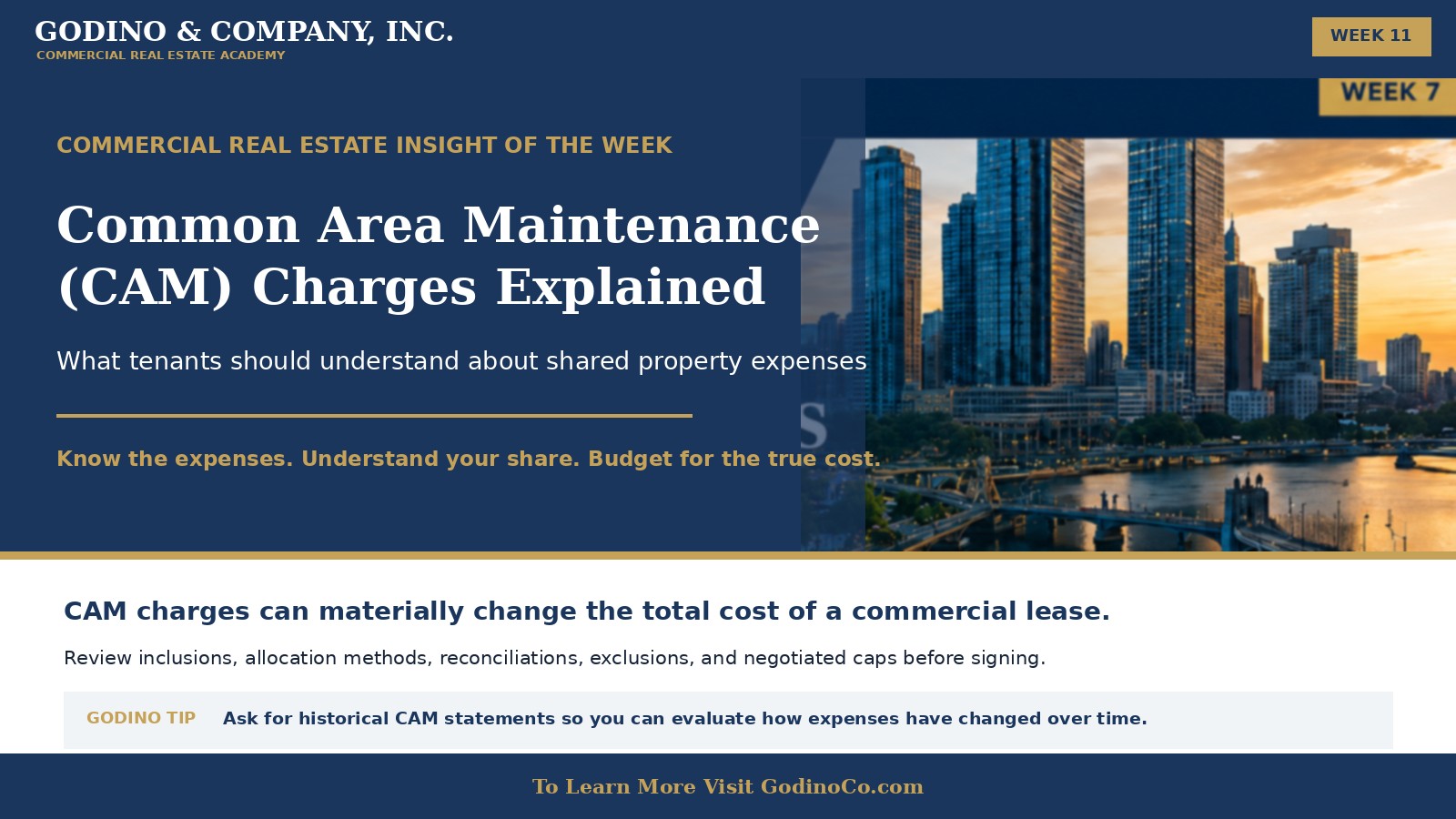
Common Area Maintenance, or CAM, charges
When evaluating commercial space, the quoted base rent is only part of the total occupancy cost. Many commercial leases also require tenants to pay a proportionate share of the expenses associated with operating and maintaining the property’s common areas. These expenses are commonly known as Common Area Maintenance, or CAM, charges.
CAM charges may include landscaping, snow removal, parking lot maintenance, common-area utilities, cleaning, security, trash removal, exterior lighting, and other shared expenses. Because every lease defines CAM differently, tenants should carefully review what is included, how their share is calculated, and how annual reconciliations are handled.
Before committing to a property, request recent CAM statements and current-year estimates. Comparing historical charges can help identify cost trends, improve budgeting, and provide a more accurate comparison between competing properties.
At Godino & Company, Inc., we help clients evaluate the complete economics of a commercial lease—not just the advertised base rent.
- Posted: 8/24/26
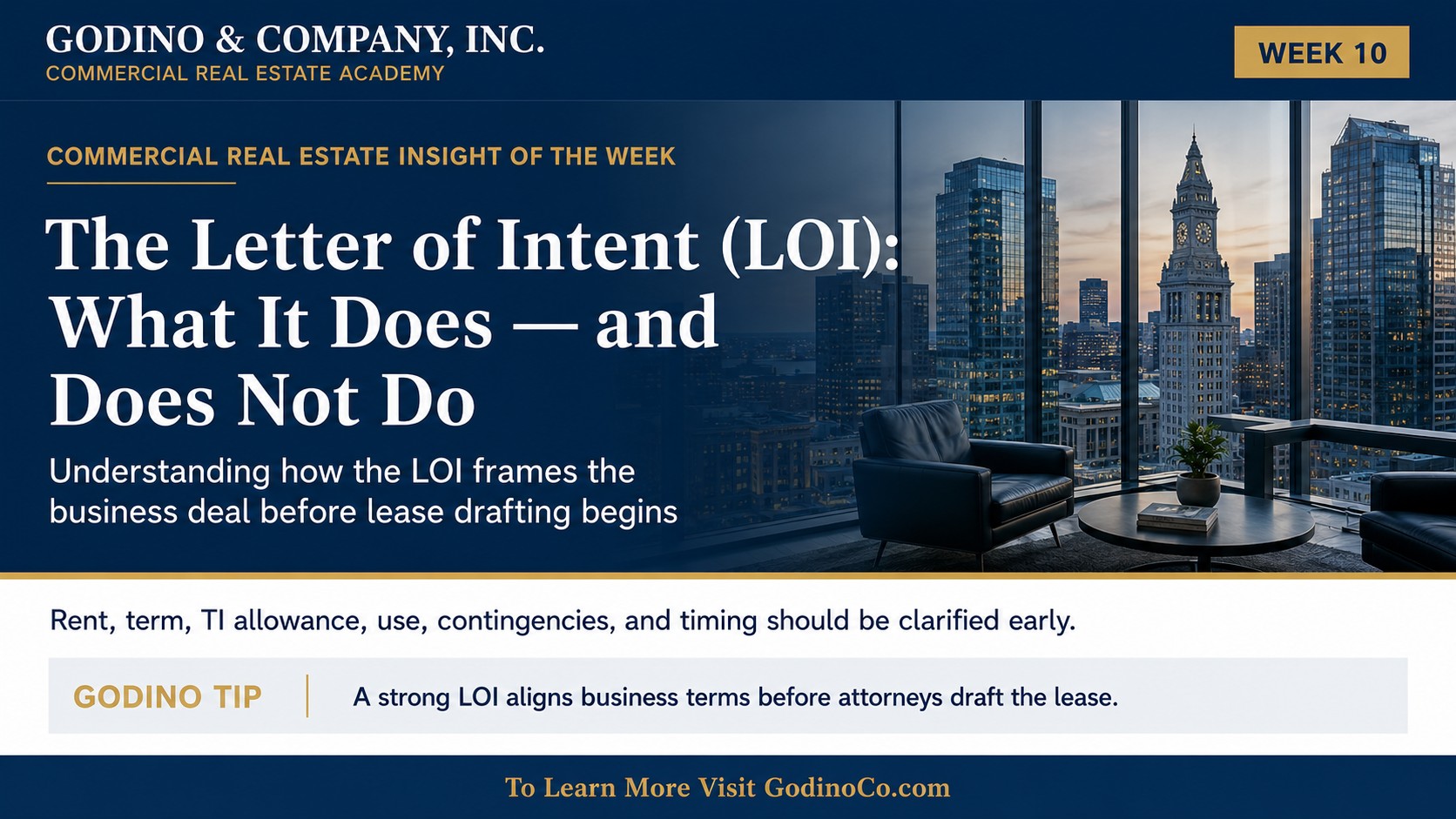
Week 10: The Letter of Intent—What It Does and Does Not Do
Before a commercial lease is drafted, the landlord and tenant typically use a Letter of Intent (LOI) to outline the proposed business terms of the transaction. A well-prepared LOI creates a framework for negotiations, identifies potential issues early, and gives the attorneys a clearer roadmap for drafting the lease.
What an LOI Should Address
The LOI should clarify the deal’s most important business points, including:
- Base rent and scheduled increases
- Lease term and renewal options
- Tenant improvement allowance
- Delivery and condition of the premises
- Permitted use
- Operating expenses
- Contingencies and approvals
- Important deadlines and timing
What an LOI Is—and Is Not
An LOI summarizes the parties’ current understanding of the proposed transaction. Although most LOIs are primarily non-binding, certain provisions—such as confidentiality, exclusivity, and access—may be binding.
The LOI is not the final lease, but that does not make it unimportant. Terms established during the LOI stage often shape the entire lease negotiation. If a significant issue is overlooked, it may resurface later, delay the transaction, increase legal costs, or change the economics of the deal.
Godino Tip of the Week
Treat the LOI as a strategic document, not a shortcut. Clarifying the economics, timing, responsibilities, approvals, and rights of each party before legal drafting begins can lead to a more efficient negotiation and fewer surprises.
Need guidance with your next commercial real estate transaction? Contact Godino & Company, Inc. to learn how our experience can help you navigate the process.
- Posted: 8/14/26
Gross, Modified Gross, and Net Leases Explained
When comparing commercial properties, the quoted rental rate does not always tell the complete story. The lease structure determines how expenses such as real estate taxes, property insurance, utilities, maintenance, and common area costs are divided between the landlord and tenant.
A gross lease typically includes most operating expenses in one rental payment. A modified gross lease divides certain expenses between the landlord and tenant. With a net lease, the tenant pays base rent plus some or all of the property’s operating expenses.
Because every lease is different, tenants should carefully review what is included before comparing properties or signing an agreement. Understanding the total occupancy cost—not just the base rent—can help prevent unexpected expenses and support better business decisions.
Godino & Company, Inc. helps businesses evaluate commercial lease opportunities, understand proposed terms, and negotiate with confidence.
Contact us to discuss your commercial real estate needs.
- Posted: 8/3/26

Understanding Cap Rates: A Guide to Smarter Commercial Real Estate Investing
A capitalization rate, commonly known as a cap rate, is one of the most useful tools for evaluating commercial real estate investments. It helps investors compare similar properties, estimate potential returns, and understand the relationship between risk and value.
However, a cap rate is only one part of the investment analysis. Location, tenant strength, lease terms, property condition, future capital expenses, and market trends must also be considered.
In Week 8 of the Godino Commercial Real Estate Academy, we explain how cap rates are calculated, what influences them, and why the highest cap rate does not always represent the best investment opportunity.
Contact Godino & Company to learn how we can help you evaluate commercial real estate opportunities and make informed investment decisions.
- Posted: 7/29/26
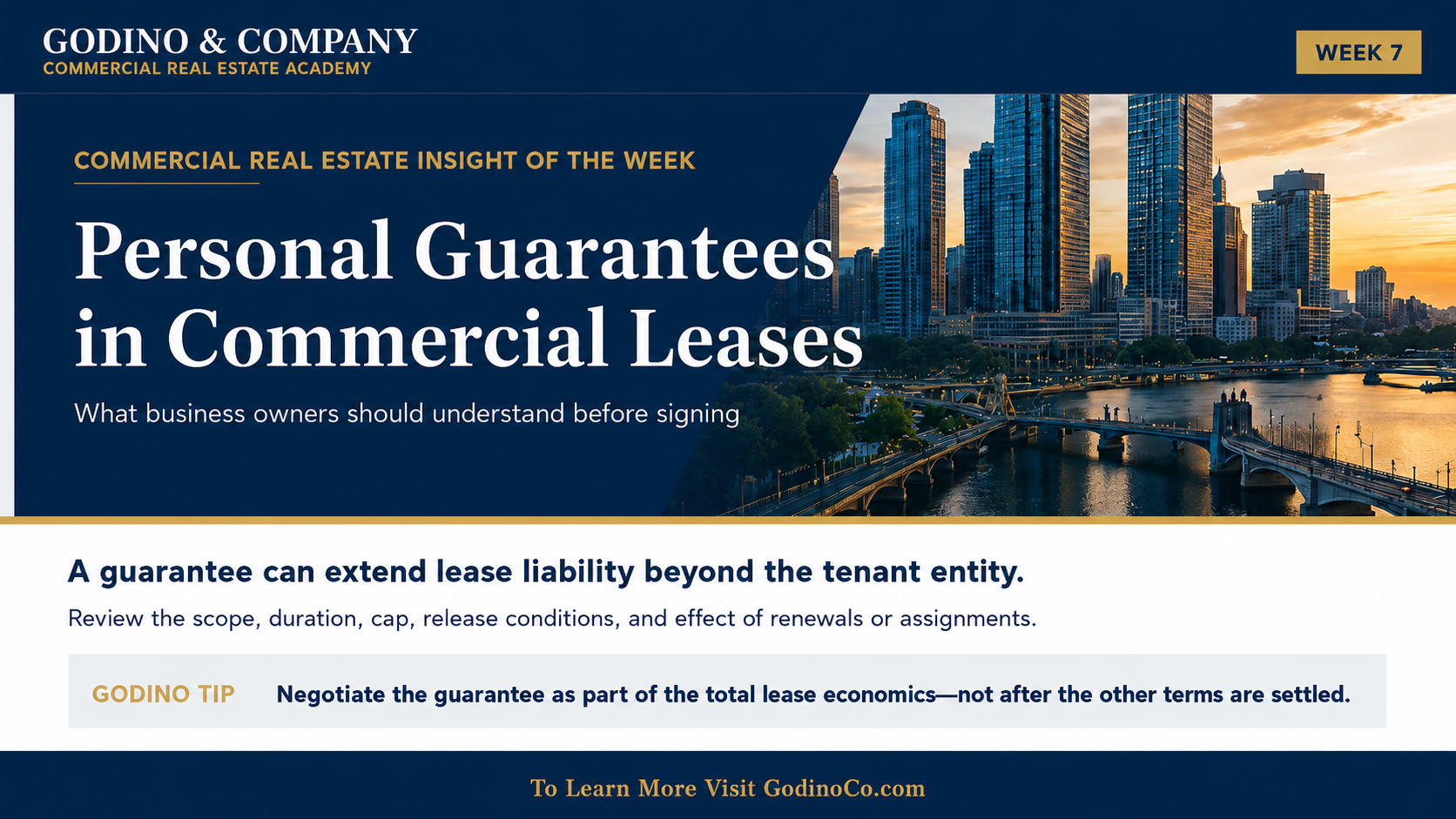
Personal Guarantees in Commercial Leases: What Business Owners Should Know
Commercial Real Estate Insight of the Week – Week 7
A personal guarantee can extend responsibility for a commercial lease beyond the tenant’s business entity and directly to the individual signing it. Before agreeing to one, business owners should carefully review the scope, duration, liability cap, release conditions, and whether the guarantee continues through lease renewals or assignments.
Depending on the terms, a guarantee may be limited to a specific dollar amount, decrease over time, or end once certain conditions are satisfied. These provisions should be negotiated as part of the overall lease economics—including rent, lease term, security deposit, improvement costs, and exit options.
Godino Tip: Understand exactly when and how the guarantee ends before signing.
For assistance with your commercial real estate needs, contact Godino & Company or visit GodinoCo.com.
- Posted: 7/20/26
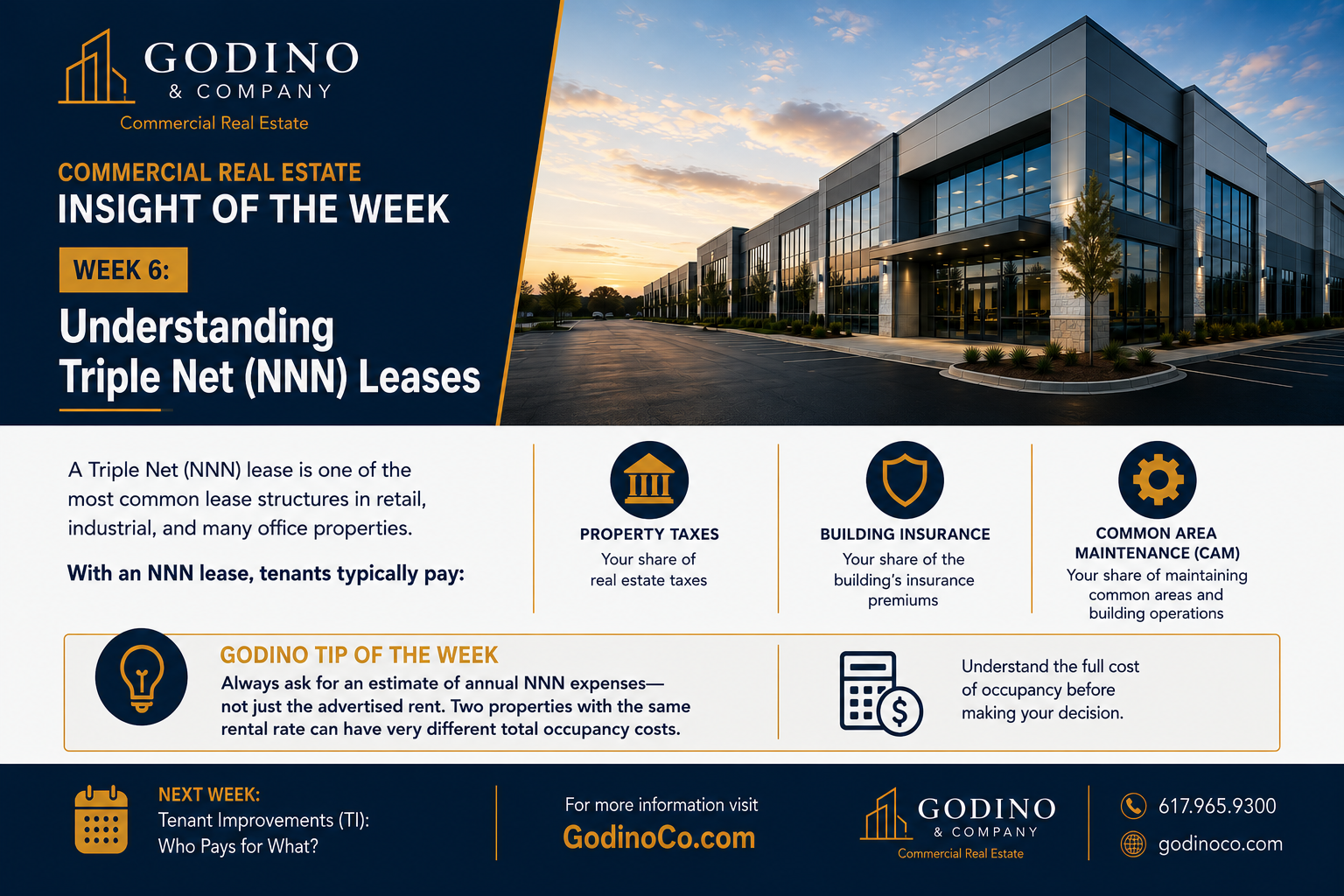
Tenant Improvements (TI): Who Pays for What?
When negotiating a commercial lease, one of the most important questions is who is responsible for paying for tenant improvements (TI). The answer depends on the lease structure, the condition of the space, current market conditions, and the terms negotiated between the landlord and tenant.
Typically, landlords are responsible for the base building and core systems, while tenants fund improvements specific to their business. Many leases include a Tenant Improvement (TI) Allowance to help offset build-out costs, but expenses beyond that allowance are often the tenant's responsibility unless otherwise negotiated.
Understanding these responsibilities before signing a lease can help avoid unexpected costs, improve budgeting, and lead to more favorable lease terms. Whether you're leasing office, medical, retail, or industrial space, knowing how tenant improvements are structured is essential to making informed real estate decisions.
At Godino & Company, we help landlords and tenants negotiate commercial leases that protect their interests and maximize value. If you're considering leasing commercial space or have questions about Tenant Improvement Allowances, our team is here to help.
Contact us today:
- Phone: 617-965-4200
- Website: www.godinoco.com
- Posted: 7/8/26
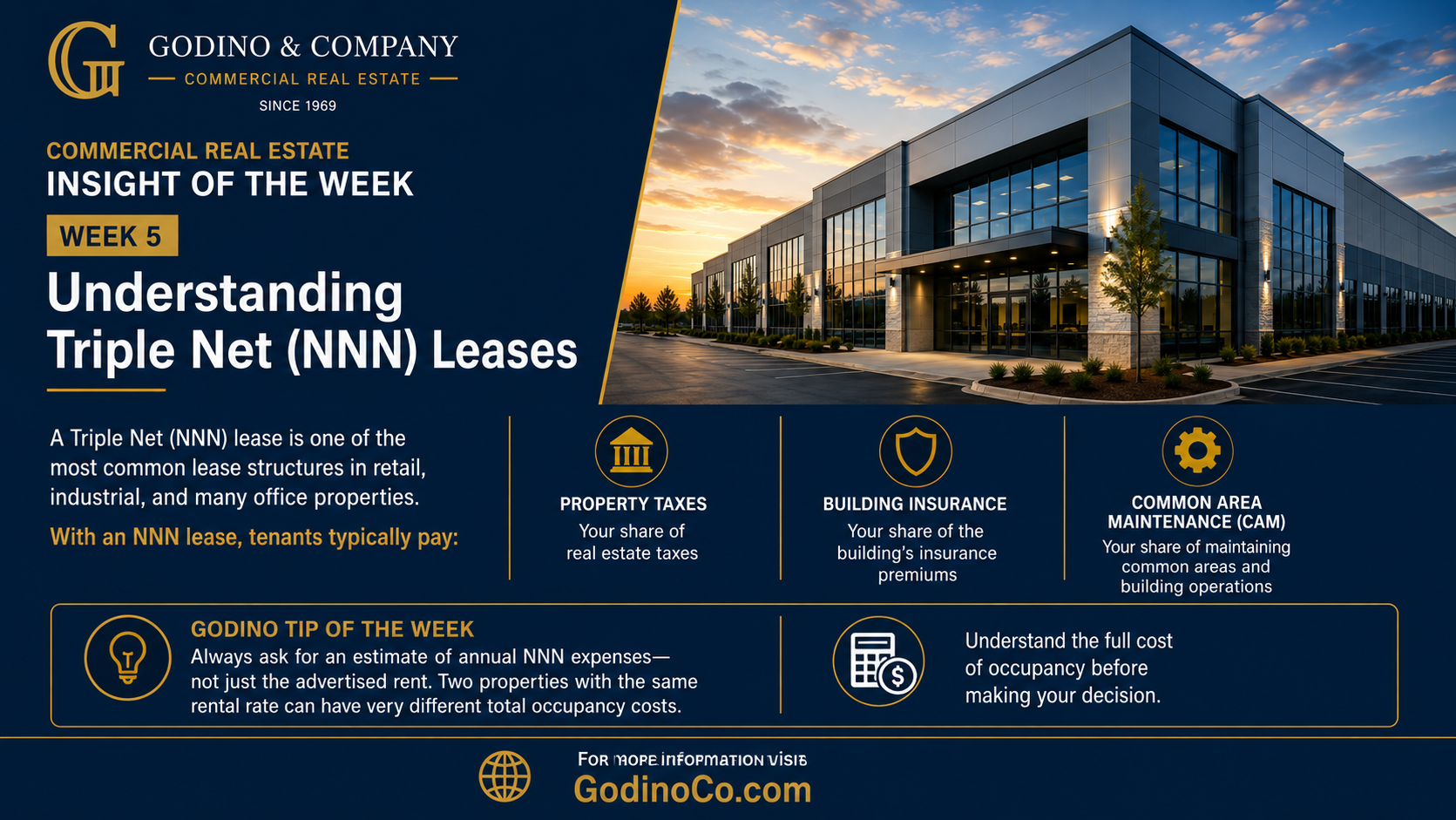
Understanding Triple Net (NNN) Leases
Commercial Real Estate Insight of the Week – Week 5
Understanding Triple Net (NNN) Leases
When searching for commercial space, many tenants focus on the advertised rental rate. However, understanding the full cost of occupancy is just as important.
One of the most common lease structures in commercial real estate is the Triple Net (NNN) lease. NNN leases are frequently used for retail, office, and industrial properties because they allow landlords to pass through certain operating expenses while providing tenants with greater transparency regarding building costs.
What Does an NNN Lease Include?
In addition to paying base rent, tenants are generally responsible for their proportionate share of:
- Property Taxes – Your share of the real estate taxes assessed on the property.
- Building Insurance – Your portion of the building's insurance premiums.
- Common Area Maintenance (CAM) – Expenses associated with maintaining common areas such as parking lots, landscaping, sidewalks, lighting, snow removal, and building operations.
- Posted: 7/1/26
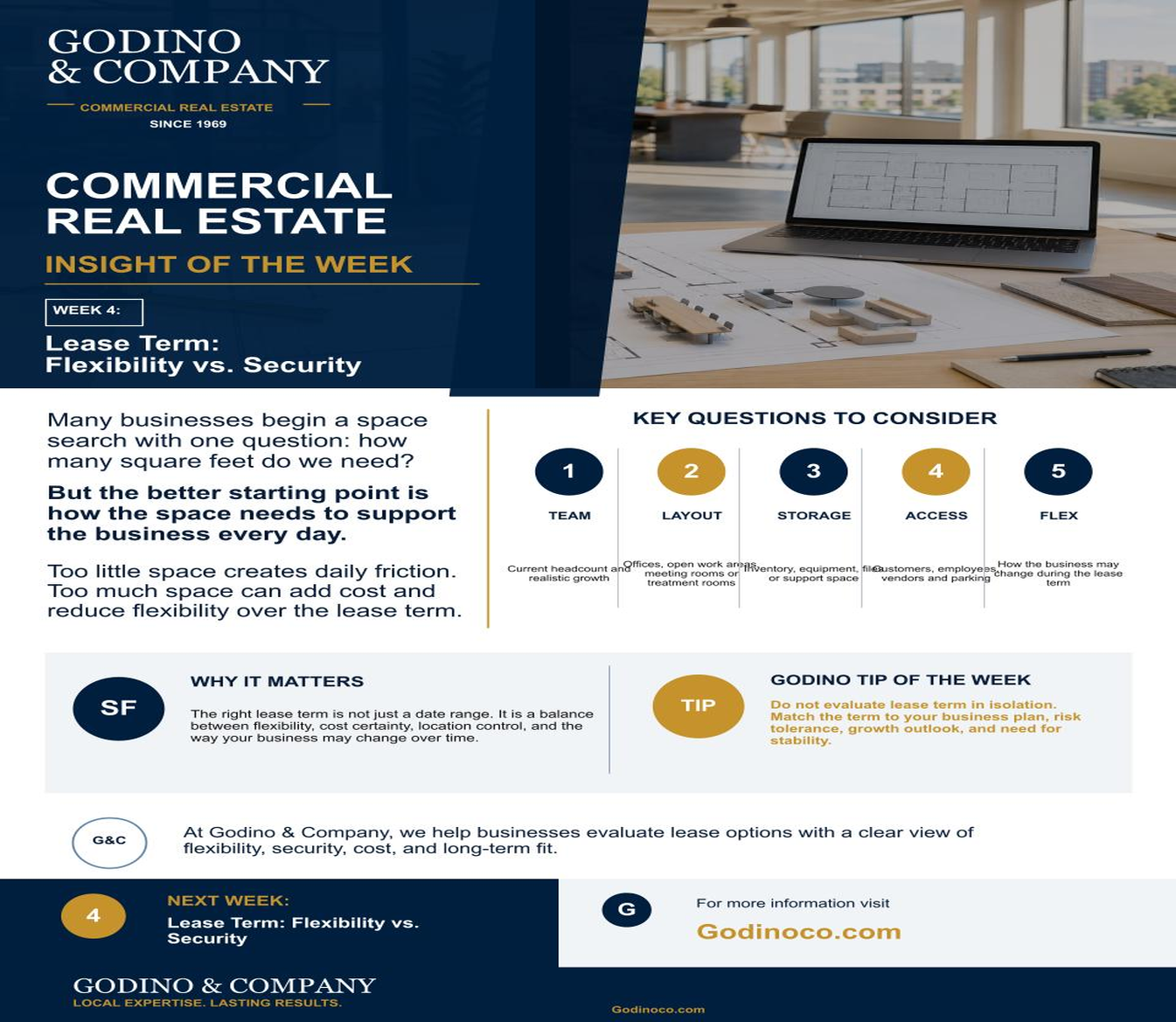
Commercial Real Estate Insight of the Week: Lease Term – Flexibility vs. Security
Commercial Real Estate Insight of the Week – Week 4
Commercial Real Estate Insight of the Week: Lease Term – Flexibility vs. Security
One of the most overlooked decisions in commercial real estate isn't the building itself—it's the lease term.
While many businesses focus on rental rates and square footage, the length and structure of a lease can have a significant impact on future growth, operational flexibility, and financial stability.
A shorter lease may provide the flexibility to adapt as your business evolves. A longer lease can offer greater certainty, cost predictability, and protection against market changes.
The right solution depends on your business plan, growth outlook, risk tolerance, and operational needs.
Before committing to a lease, consider:
• Current and projected staffing levels
• Space layout and operational requirements
• Storage and equipment needs
• Customer, employee, and vendor access
• How your business may change during the lease term
The goal is not simply to find space—it's to secure a lease structure that supports your business both today and in the future.
At Godino & Company, we help businesses evaluate commercial real estate decisions with a focus on long-term success.
What factors are most important to your organization when determining the right lease term?
#CommercialRealEstate #BusinessStrategy #LeaseNegotiations #OfficeSpace #IndustrialRealEstate #BusinessGrowth #GodinoAndCompany #CommercialLeasing
- Posted: 6/23/26